


Product Description
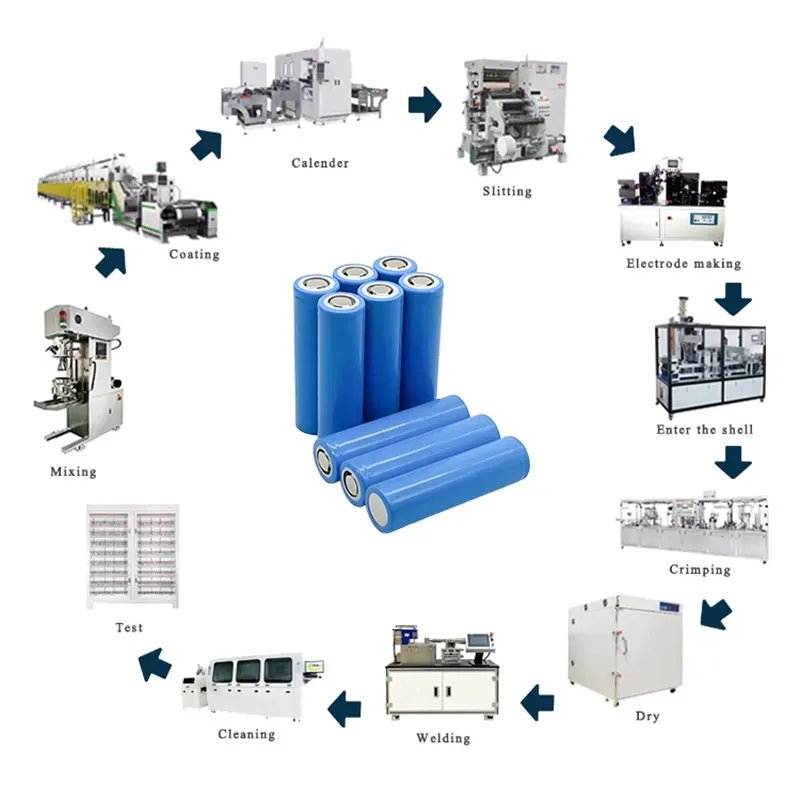
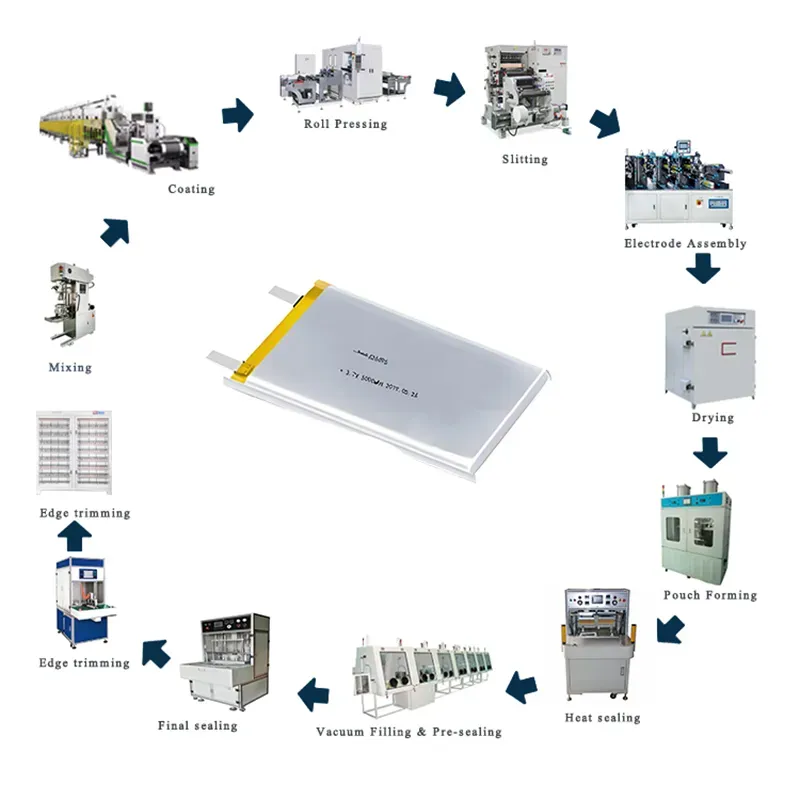
1. Automated Battery Cell Assembling Design Requirements
1.1,Automated Battery Cell Assembling Technical parameter:
(1)Equipment capacity: ≥10PPM;
(2)The final excellent rate is ≥99.8% (only the bad products caused by the equipment);
(3)Equipment failure rate ≤ 2%;
(4)Compatible with a variety of size module specifications, quick change. Laser output power stability (fluctuation) ≤±1%, the focal length of the galvanometer can be digitally displayed and adjusted, the range is -5.0~+5.0mm, and the adjustment accuracy is ≤0.5mm;(5)The welding track is edited by welding software, the welding process is automated, the parameters can be modified, and the operation and modification authority can be set
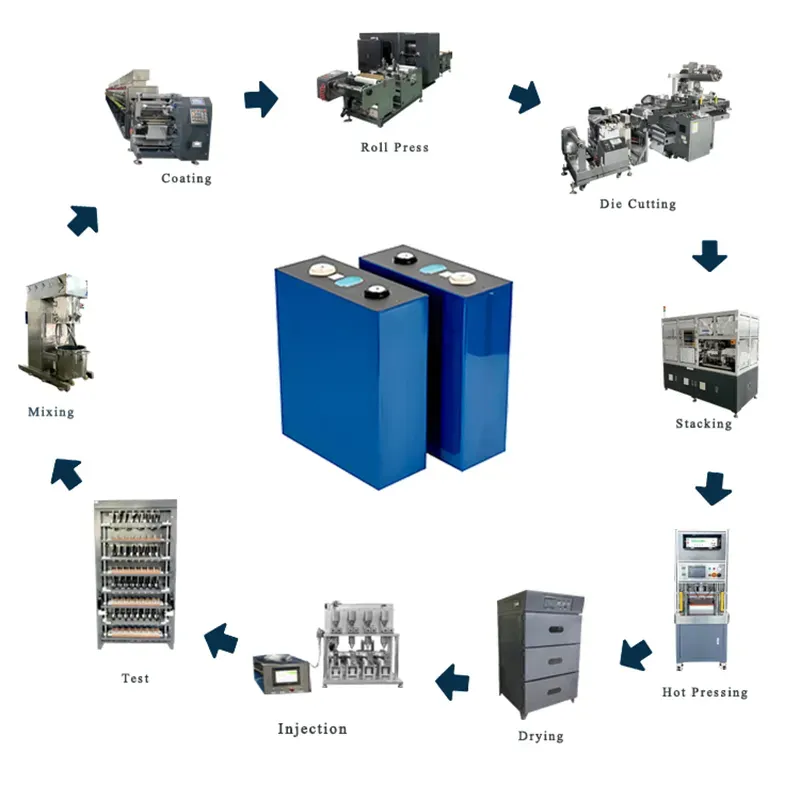
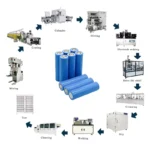
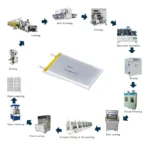
1.2,Flow Chart:

Tentative process flow, subject to actual requirements
2. Program Layout
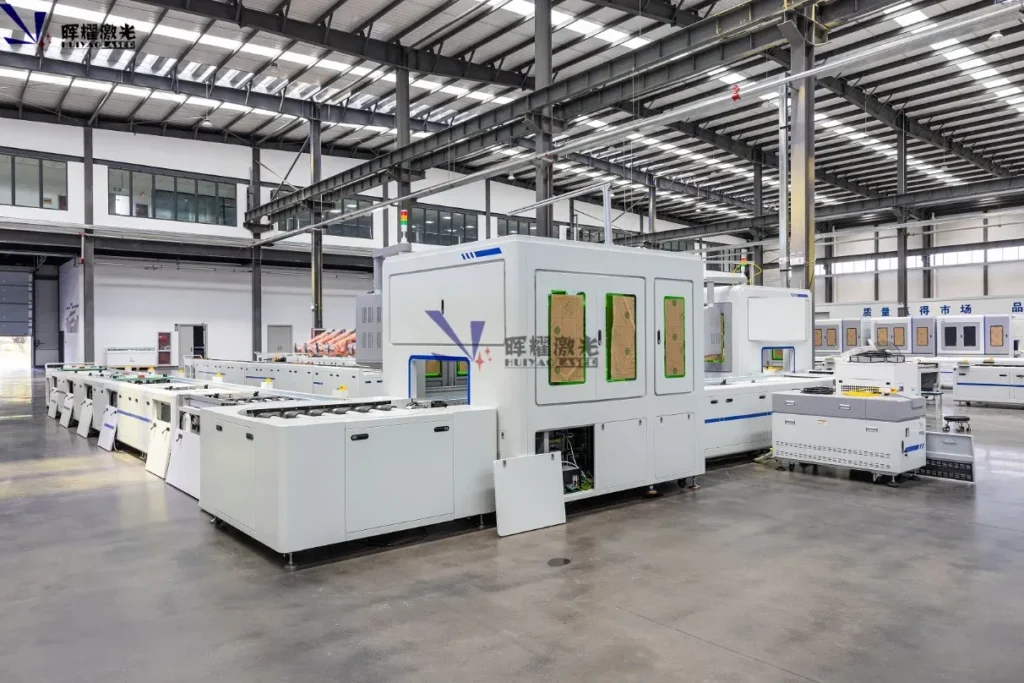
2.1 Program Renderings:

2.2 Layout Size:

Back layout size(L*W*H):19500mm*9000mm*3200mm
Front layout size(L*W*H):13000mm*6000mm*2300mm
3. Function Module Introduction
3.1 Ceaning Gluing Station
3.1.1 Equipment description:

Internal structure diagram of cell cleaning and gluing
Introduction of cleaning and gluing station: 1. After the worker places the battery cell on the feeding conveyor belt, the equipment can automatically complete the cleaning and gluing; 2. Equipment beat: 12PPM;
3.1.2 Equipment parameters:
| Name | Parameters |
| Power supply | AC220V/50HZ |
| Air supply | 0.5-0.7Mpa |
| Size | L2600mm*W1250mm*H1800mm |
| Working temperature | 5-40ºC |
| cleaning range | X/Y(mm):300/300mm |
| gluing range | X/Y(mm):300/300mm |
| Moving speed | X/Y/Z(mm/set):300mm |
| repeat accuracy | ±0.02mm |
| Weight | About 650KG |
| glue ratio | 1:1 |
| AB mix | Dynamic mixing |
| gluing accuracy | 0.02g,The error ratio does not exceed ±5% |
| Robot system | BORUNTE 4 axis Robot |
| Operating mode | point-to-point/continuous line segment |
| Gluing system | HY |
| Control system | HY |
| Pneumatic Components | Airtac |
| servo motor | Panasonic Servo System |
| Photoelectric Sensors | Omron |
| Power | MEAN WELL,HENGFU |
| Ball screw | TBI |
| Linear Guides | HIWIN |
| Frame | Fangtong welding mechanism,countertop soldering
iron block,gantry milling |
| sheet metal | Sheet metal fully enclosed structure,
transparent window |
Contact us for more information of automatic assembly line.
3.2 Stacking Rotary Tables

3.2.1 Description of the Action Flow:
1. Action process: The stacking robot unloads and unloads materials from the gluing equipment conveyor line, and performs stacking operations in the serial-parallel sequence of the module recipes. This stacking method can flexibly accommodate module combinations with different recipes in series-parallel sequences. The stacking sequence is from bottom to top, and the cells and insulating plates are alternated, from the 1st hand cell to the 1st hand insulating plate, and then to the last hand 1 cell. During the stacking process, a downward pressing and beating mechanism is simultaneously pre-pressed and fixed.
2. The gripper is controlled by the robot to control the gripping mechanism, and the gripper is designed with photoelectric induction cells in place. The module stacking platform adopts a fixed-slope dual-station design. Each station contains dual clamps, which can place two cells at the same time. When the A station is stacking, the B station synchronously performs the moving work before extrusion, and the double station alternates, so as to improve the efficiency of stacking and moving.

3.2.2 Changeover Strategy Explained:
1. Change the cell gripper: choose a long-stroke clamping cylinder, which can be automatically compatible with different types of cells when changing;
2. Changing the gripper of the insulating plate: the vacuum suction cup assembly is installed on the aluminum profile, and the distance between the suction cups can be adjusted manually according to the width of the insulating plate when changing the model.
3. Electrical program: According to the serial-parallel stacking sequence of compatible modules, the robot performs the stacking operation according to the preset robot stacking sequence program. Before changing the model, the stacking program of the model-changing product is transferred.

3.2.3 Changeover Strategy Explained:
 3.3 Function module introduction
3.3.1 Extrusion station: Double-row module process

1. The handling robot transports the single-row stacks 1 and 2 respectively from the stacking turntable to the extrusion table sliding table, and the sliding table slides to the manual extrusion position; 2. Manually install the middle partition board (manual cleaning and gluing), end insulation board (manual cleaning and gluing), and end plates (manual cleaning and gluing), and then press the button to install the steel cable ties.
3.3.2 Extrusion station:

3.3.3 Extrusion station: Equipment flow description:
1. Place the glued cells by the handling robot to the discharge position of the sliding table, and the sliding table automatically slides to the manual extrusion position;
2. Manually attach both ends to the end plate, install the side rails, first press the width direction extrusion button to make the length direction of the module horizontal; then press the extrusion start button, the cylinder drives the top plate to extrude the cell, When it reaches the set length, it stops, inserts the steel belt, punches the plastic steel belt, and rives the screw;
3. After the installation is completed, press the open button, squeeze the cylinder to retract, and then press the slide button, the installed module slides to the discharge position again, and the robot grabs it to the stationary trolley.

3.3.4 Extrusion station: Changeover Strategy Explained:
Extrusion Tooling Changeover Instructions
1. Change of handling gripper: Servo + screw clamping mechanism is adopted, and the electrical program can be switched with one key during model change;
2. Extrusion table change: choose a long-stroke clamping cylinder, which can be automatically compatible with different types of batteries when changing;
3. Robot program: According to the size of the compatible module, the robot will follow the preset robot handling program. Before changing the model, transfer the handling program of the replacement product.
3.4 Introduction of safety fence:

Reviews
Clear filtersThere are no reviews yet.