
Factory Automation Investment: Comparing Chinese vs European vs Japanese Machinery Suppliers

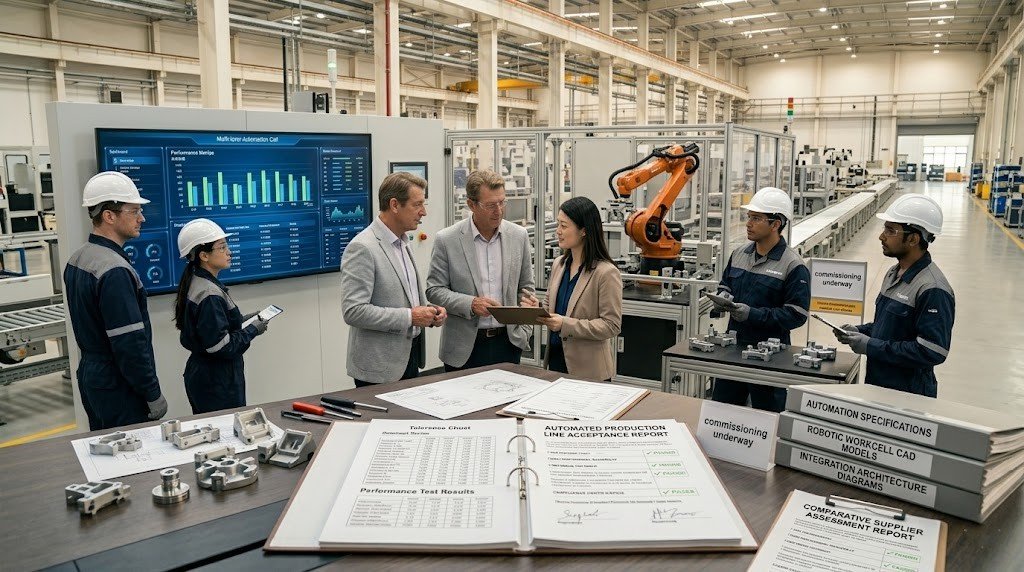
Navigating factory automation supplier selection requires a strategic comparison of regional capabilities, total cost of ownership, and long-term support infrastructure. Chinese, European, and Japanese machinery suppliers each offer distinct advantages in precision engineering, technological innovation, and commercial terms. This complete automation investment guide consolidates every critical element, from technical benchmarking to lifecycle cost analysis, into a single, actionable framework. For manufacturing executives, engineering firms, and production investors, understanding these regional differences is the key to selecting automation partners that deliver sustainable competitive advantage.
Machines in China has compiled this guide based on facilitating automation equipment exports to 126 countries and evaluating supplier capabilities across Asia and Europe. We believe that informed technology investments drive operational excellence.
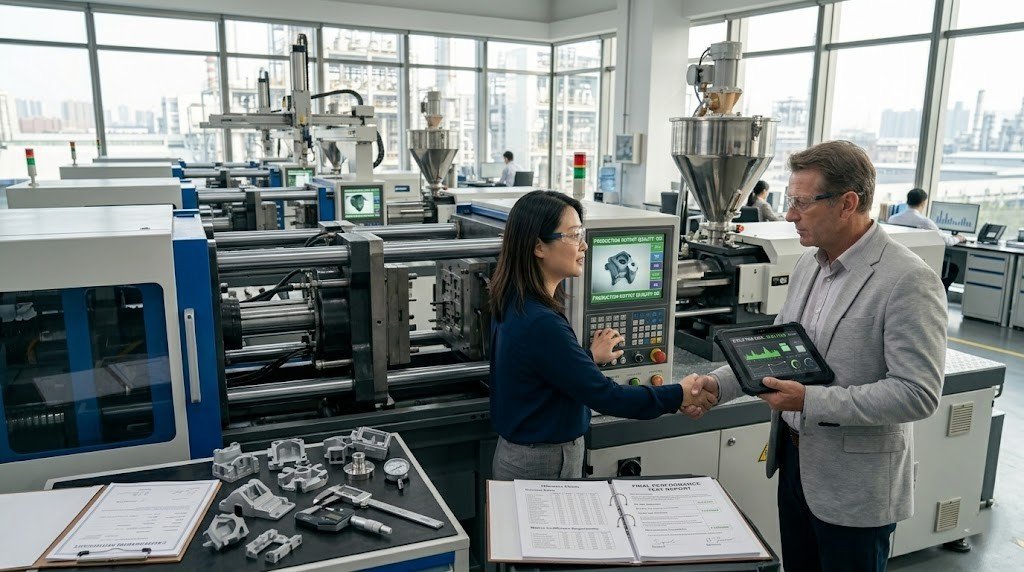
Phase 1: Technical Capability Benchmarking
Before evaluating commercial terms, establish objective technical criteria:
- Precision and Repeatability Standards: Compare positional accuracy, cycle time consistency, and tolerance maintenance across regional suppliers. Japanese manufacturers often lead in ultra-high precision applications. European suppliers excel in complex multi-axis coordination. Chinese manufacturers have closed the gap significantly for standard industrial applications while offering compelling value.
- Control System Architecture: Evaluate PLC platforms, programming environments, and integration capabilities. European systems frequently use Siemens or Beckhoff architectures. Japanese suppliers often deploy Mitsubishi or Fanuc controls. Chinese manufacturers increasingly support multiple platforms to enhance compatibility with global facilities.
- Connectivity and IIoT Readiness: Assess native support for OPC UA, MQTT, and cloud integration protocols. European suppliers typically lead in Industry 4.0 compliance. Japanese manufacturers emphasize proprietary but highly reliable ecosystems. Chinese suppliers now offer flexible connectivity options to meet diverse customer requirements.
- Safety Certification Coverage: Verify compliance with regional safety standards including CE (Europe), JIS (Japan), and GB (China). Ensure equipment meets the regulatory requirements of your destination market without costly retrofitting.
- Customization Flexibility: Evaluate each supplier’s willingness and capability to modify standard designs for your specific application. Chinese manufacturers often provide greater customization at lower cost. European and Japanese suppliers may require longer lead times for non-standard configurations.
Phase 2: Commercial and Lifecycle Cost Analysis
Move beyond purchase price to evaluate total cost of ownership:
- Initial Capital Investment: Chinese automation equipment typically offers 30 to 50 percent lower upfront costs compared to European or Japanese equivalents with similar specifications. This advantage is most pronounced for standard configurations and high-volume production applications.
- Installation and Commissioning Costs: Factor in engineering support, on-site technician travel, and integration complexity. European and Japanese suppliers often include comprehensive commissioning support in their pricing. Chinese suppliers may offer these services as optional add-ons, providing flexibility but requiring careful scope definition.
- Energy Consumption and Operating Costs: Evaluate power requirements, efficiency ratings, and maintenance intervals. Japanese equipment frequently leads in energy efficiency. European systems emphasize long service intervals. Chinese manufacturers now match international standards for most industrial applications while maintaining cost advantages.
- Spare Parts Pricing and Availability: Compare consumable costs, wear component pricing, and regional distribution networks. European and Japanese suppliers maintain extensive global parts networks. Chinese manufacturers are rapidly expanding international spare parts support through regional warehouses and distributor partnerships.
- Upgrade and Expansion Costs: Assess the cost and complexity of adding capabilities or scaling capacity over time. Modular designs and open architecture systems reduce long-term investment risk regardless of supplier origin.
Phase 3: Support Infrastructure and Service Quality
Evaluate post-sale support as a critical component of automation investment:
- Technical Documentation Quality: Review operation manuals, maintenance guides, and troubleshooting resources for clarity, completeness, and language availability. European suppliers typically provide exceptionally detailed documentation. Japanese manufacturers emphasize precision and visual clarity. Chinese suppliers have significantly improved documentation standards to meet international expectations.
- Remote Support Capabilities: Assess availability of video consultation, remote diagnostics, and software update services. All three regions now offer robust remote support, though response times and language coverage may vary.
- On-Site Service Response: Evaluate guaranteed response times, technician availability in your region, and travel cost structures. European and Japanese suppliers often maintain regional service centers. Chinese manufacturers increasingly partner with local service providers to deliver timely support.
- Training Program Depth: Compare operator training, maintenance certification, and advanced programming courses. European suppliers frequently offer comprehensive training academies. Japanese manufacturers emphasize hands-on, mentorship-based learning. Chinese suppliers now provide structured training programs with flexible delivery options.
- Warranty Terms and Claim Processing: Review coverage periods, exclusion clauses, and claims resolution procedures. Standard warranties range from 12 to 24 months across all regions. Focus on the supplier’s track record for honoring warranty commitments rather than printed terms alone.
Phase 4: Risk Assessment and Mitigation Strategies
Identify and address potential challenges associated with each supplier region:
- Supply Chain Resilience: Evaluate component sourcing strategies and backup supplier relationships. European manufacturers often maintain diversified supply chains. Japanese suppliers emphasize long-term partner relationships. Chinese manufacturers benefit from integrated domestic supply networks but may face geopolitical considerations.
- Intellectual Property Protection: Assess each supplier’s approach to design confidentiality and technology sharing. European and Japanese companies typically have mature IP protection frameworks. Chinese manufacturers have strengthened IP practices significantly, particularly for export-focused businesses, but buyers should include explicit confidentiality provisions in contracts.
- Regulatory Compliance Evolution: Monitor changes in safety, environmental, and trade regulations that may affect equipment certification or import eligibility. European suppliers lead in anticipating regulatory shifts. Japanese manufacturers excel in consistent compliance execution. Chinese exporters increasingly proactively address international regulatory requirements.
- Currency and Payment Risk: Consider exchange rate volatility and payment security mechanisms. Diversify currency exposure where possible and use secure payment instruments such as letters of credit for high-value automation investments.
- Technology Obsolescence Planning: Evaluate each supplier’s product lifecycle management and upgrade pathways. Japanese manufacturers often provide exceptionally long product support windows. European suppliers emphasize modular upgradeability. Chinese manufacturers now offer competitive lifecycle support with flexible refresh options.
Critical Success Factors
To ensure automation supplier selection delivers sustainable value, remember:
- Define Application Requirements Precisely: Vague specifications lead to mismatched solutions. Document production targets, quality standards, integration constraints, and growth expectations before engaging suppliers.
- Evaluate Total Cost of Ownership: Purchase price represents only one component of automation investment. Include installation, operation, maintenance, and upgrade costs in your comparison framework.
- Verify Support Capabilities Locally: A supplier’s global reputation matters less than their ability to support your specific facility. Confirm local technician availability, spare parts inventory, and response time commitments.
- Plan for Integration Complexity: Automation systems must interface with existing equipment, control systems, and facility infrastructure. Prioritize suppliers with proven integration experience in your industry.
- Build in Flexibility for Change: Market demands and production requirements evolve. Select automation partners whose systems can adapt to new products, volumes, or processes without complete replacement.
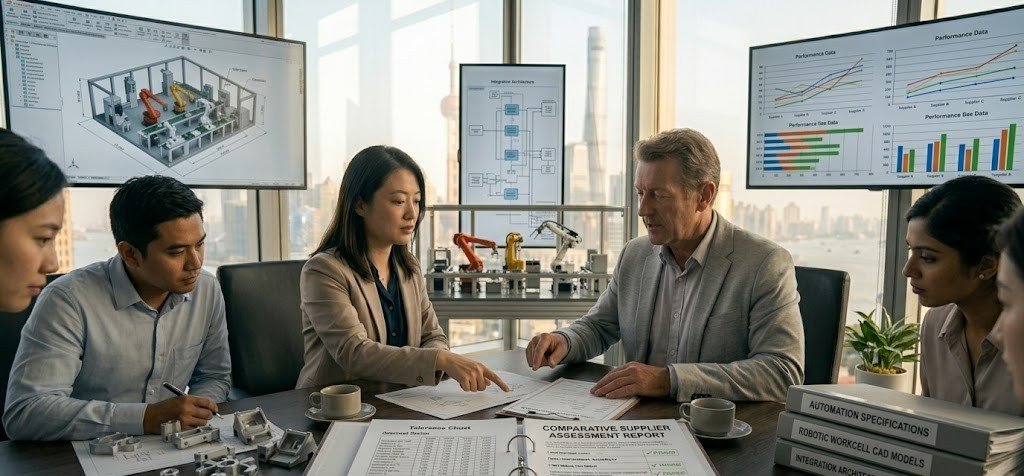
Regional Strengths Summary
Understanding each supplier region’s distinctive advantages supports informed decision making:
- Chinese Suppliers: Best for cost-sensitive projects, standard automation applications, high customization requirements, and buyers seeking flexible commercial terms. Rapidly improving quality and support infrastructure make Chinese automation increasingly competitive for mainstream industrial applications.
- European Suppliers: Best for complex multi-axis systems, stringent safety or regulatory environments, applications requiring deep integration with existing European equipment, and buyers prioritizing comprehensive documentation and training.
- Japanese Suppliers: Best for ultra-high precision applications, industries emphasizing long equipment lifecycles, facilities requiring exceptional reliability with minimal maintenance, and buyers valuing consistent quality execution over time.
Many successful automation investments combine equipment from multiple regions, leveraging each supplier’s strengths for different production stages or functions.
The Role of Sourcing Partners in Supplier Evaluation
Experienced procurement partners add strategic value to automation supplier selection:
- Objective Comparison Framework: Independent evaluators apply consistent technical and commercial criteria across regional suppliers, reducing bias toward familiar brands or regions.
- Factory Verification Expertise: On-site audits assess actual production capabilities, quality systems, and support infrastructure beyond marketing claims or website presentations.
- Negotiation Leverage: Sourcing partners with volume relationships can secure favorable pricing, terms, and support commitments that individual buyers may not achieve independently.
- Risk Mitigation Support: Professional partners help structure contracts, payment terms, and quality verification protocols that protect buyer interests throughout the automation investment lifecycle.
When engaging sourcing partners, provide clear evaluation criteria, maintain open communication about priorities and constraints, and leverage their regional expertise to validate supplier claims.
Conclusion
This complete guide to factory automation investment underscores one truth: there is no universally superior supplier region. Chinese, European, and Japanese automation manufacturers each offer compelling advantages depending on your application requirements, budget parameters, and operational priorities. By applying systematic technical benchmarking, lifecycle cost analysis, and risk assessment, international buyers can select automation partners that deliver sustainable competitive advantage.
Machines in China is committed to being your trusted partner in automation sourcing, providing objective supplier evaluation, factory verification, and quality assurance to protect your technology investment at every stage. The opportunity to access world-class automation equipment from multiple regions is vast. The path to selecting the right partner is clear. Welcome to confident, strategic factory automation investment.
Website: https://machines-in-china.com Email: sales@machines-in-china.com