
Import Duties and Customs Clearance for Industrial Machinery: A Country-by-Country Guide

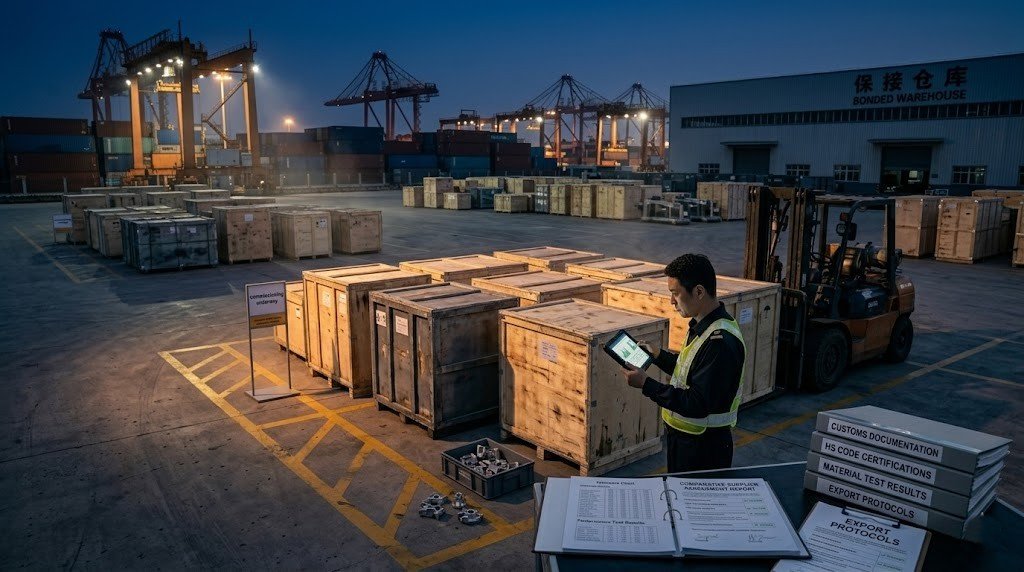
Navigating customs clearance for industrial machinery imports is a complex but essential competency for any business sourcing equipment from China. Duty rates, documentation requirements, and regulatory procedures vary dramatically across destination markets. Missteps can result in costly delays, unexpected fees, or even seizure of cargo. This complete customs guide consolidates every critical element, from HS code classification to country-specific clearance protocols, into a single, actionable reference. For procurement managers, logistics coordinators, and factory owners, mastering these import fundamentals is the key to predictable timelines, controlled costs, and compliant equipment deployment.
Machines in China has compiled this guide based on coordinating machinery exports to 126 countries and resolving customs challenges across diverse regulatory environments. We believe that prepared importers avoid costly surprises.
Phase 1: Foundation Knowledge for Machinery Imports
Before engaging with destination customs authorities, build essential technical understanding:
- HS Code Classification Fundamentals: The Harmonized System code determines duty rates, import licenses, and regulatory requirements for your machinery. Industrial equipment typically falls under Chapter 84 (nuclear reactors, boilers, machinery) or Chapter 85 (electrical machinery, equipment). Precise classification requires understanding machine function, technical specifications, and intended application.
- Duty Rate Calculation Methods: Import duties may be assessed as ad valorem (percentage of goods value), specific (fixed amount per unit), or compound (combination of both). Some countries apply additional taxes such as VAT, GST, or excise duties on top of base customs duties.
- Certificate of Origin Requirements: Many trade agreements offer duty reductions for goods originating in specific countries. Verify whether your machinery qualifies for preferential treatment under agreements such as ASEAN-China FTA, RCEP, or bilateral arrangements.
- Import License and Permit Obligations: Certain machinery categories require pre-approval from destination country authorities. Examples include food processing equipment needing health ministry clearance, or industrial robots requiring safety certification before import.
- Valuation Methodologies: Customs authorities assess goods value using transaction value, identical goods value, or deductive value methods. Ensure commercial invoices accurately reflect payment terms, included services, and currency conversions to avoid valuation disputes.
Phase 2: Regional Customs Clearance Protocols
Understand destination-specific requirements to streamline clearance:
Africa
- Nigeria: Industrial machinery imports require Form M procurement, SONCAP certification for product standards, and payment of 5 to 20 percent customs duty plus 7.5 percent VAT. Engage a licensed customs broker familiar with Apapa Port procedures to navigate documentation and inspection requirements.
- Kenya: Machinery imports undergo PVoC (Pre-Export Verification of Conformity) inspection, attract 25 percent import duty plus 16 percent VAT, and require KEBS certification. Pre-arrival documentation submission via the Kenya TradeNet System accelerates clearance.
- South Africa: Industrial equipment classification follows SARS guidelines, with duties ranging from 0 to 20 percent plus 15 percent VAT. Import permits may be required for controlled items. Partner with a SATAS-accredited clearing agent for efficient processing.
Middle East
- Saudi Arabia: Machinery imports require SABER platform registration, SASO certification, and payment of 5 to 15 percent customs duty plus 15 percent VAT. Pre-shipment conformity assessment is mandatory for most industrial equipment.
- United Arab Emirates: Dubai and Abu Dhabi ports offer efficient clearance with 5 percent customs duty and 5 percent VAT. Free zone imports may qualify for duty exemptions. Ensure commercial invoices specify Incoterms and country of origin clearly.
- Egypt: Industrial machinery attracts 2 to 40 percent customs duty depending on classification, plus 14 percent VAT. Advance Cargo Information Declaration (ACID) registration via the Nafeza system is required before shipment departure.
Asia
- Vietnam: Machinery imports benefit from ASEAN-China FTA preferences, with duties often reduced to 0 to 5 percent plus 8 to 10 percent VAT. C/O Form E certification enables preferential rates. Pre-check technical specifications against Vietnamese standards to avoid reclassification delays.
- Indonesia: Industrial equipment requires SNI certification for certain categories, attracts 0 to 15 percent import duty plus 11 percent VAT, and must clear through the INSW single-window system. Engage a licensed PPJK customs consultant for complex shipments.
- India: Machinery classification follows the Customs Tariff Act, with basic customs duty ranging from 7.5 to 15 percent plus integrated GST. BIS certification may be required for electrical components. File Bill of Entry electronically via ICEGATE for expedited processing.
Latin America
- Brazil: Industrial machinery imports face complex regulatory requirements including RADAR registration, INMETRO certification for electrical equipment, and import duties ranging from 14 to 35 percent plus ICMS state tax. Engage a experienced despachante aduaneiro for navigation.
- Mexico: Machinery classification follows TIGIE guidelines, with import duties typically 0 to 15 percent plus 16 percent VAT. NAFTA/USMCA rules of origin may apply for components. Pre-validate HS codes with Mexican customs to avoid reclassification penalties.
- Colombia: Industrial equipment attracts 5 to 15 percent customs duty plus 19 percent VAT. Import registration via the VUCE single-window system is mandatory. Partner with a licensed customs agent for efficient clearance at major ports.
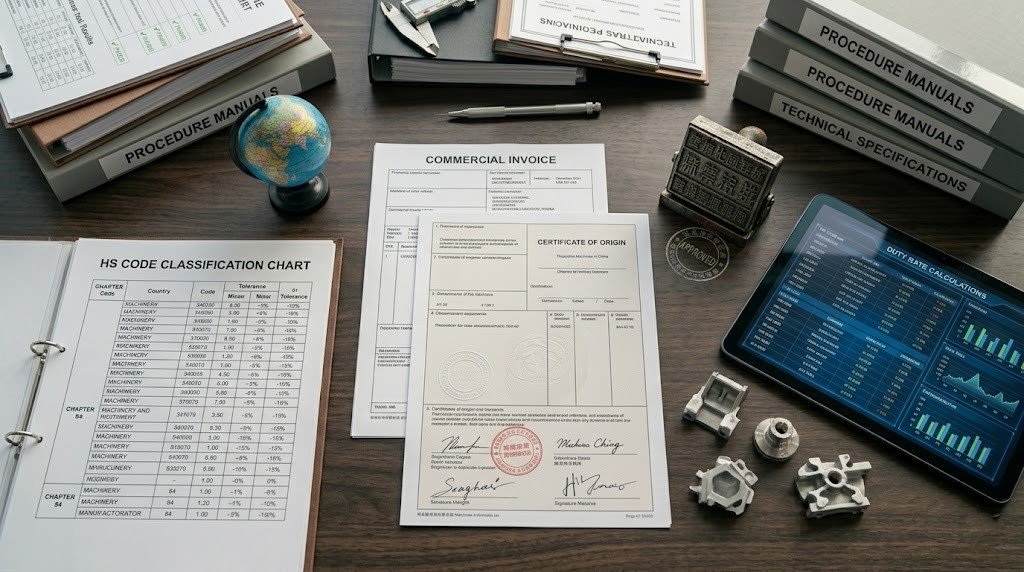
Phase 3: Documentation Preparation and Submission
Accurate, complete documentation prevents clearance delays:
- Commercial Invoice Essentials: Include seller and buyer details, full equipment description with HS codes, unit and total values, currency, Incoterms, country of origin, and payment terms. Ensure values match bank transfer records to avoid valuation disputes.
- Packing List Requirements: Detail crate dimensions, gross and net weights, package counts, and itemized contents. Match packing list data to commercial invoice and bill of lading to prevent discrepancies during inspection.
- Bill of Lading Accuracy: Verify consignee details, notify party information, port of loading and discharge, vessel name, and container numbers. Errors in these fields can delay cargo release or trigger additional scrutiny.
- Certificate of Origin Validation: Obtain C/O from authorized chambers of commerce or trade promotion bodies. Ensure the certificate matches invoice details and qualifies for any applicable preferential duty treatment.
- Technical Documentation Package: Include operation manuals, electrical schematics, safety certifications, and material declarations. Some countries require these documents for regulatory clearance or post-import compliance verification.
Phase 4: Risk Mitigation and Dispute Resolution
Prepare for potential customs challenges with proactive strategies:
- Pre-Clearance Classification Rulings: Request binding tariff information from destination customs authorities before shipment. This provides legal certainty on HS code classification and applicable duty rates.
- Customs Bond and Guarantee Options: For high-value shipments or complex clearance scenarios, consider customs bonds to expedite release while documentation is finalized. This reduces demurrage costs and production delays.
- Dispute Resolution Pathways: Understand the appeal process for customs valuation disputes, classification challenges, or penalty assessments. Maintain detailed records of communications, submissions, and decisions to support potential appeals.
- Broker and Agent Vetting: Engage licensed customs brokers with proven expertise in industrial equipment clearance. Verify credentials, request client references, and confirm familiarity with your specific machinery category and destination port.
- Technology-Enabled Tracking: Use digital platforms that provide real-time visibility into customs status, document submission confirmations, and clearance milestones. Proactive monitoring enables rapid response to emerging issues.
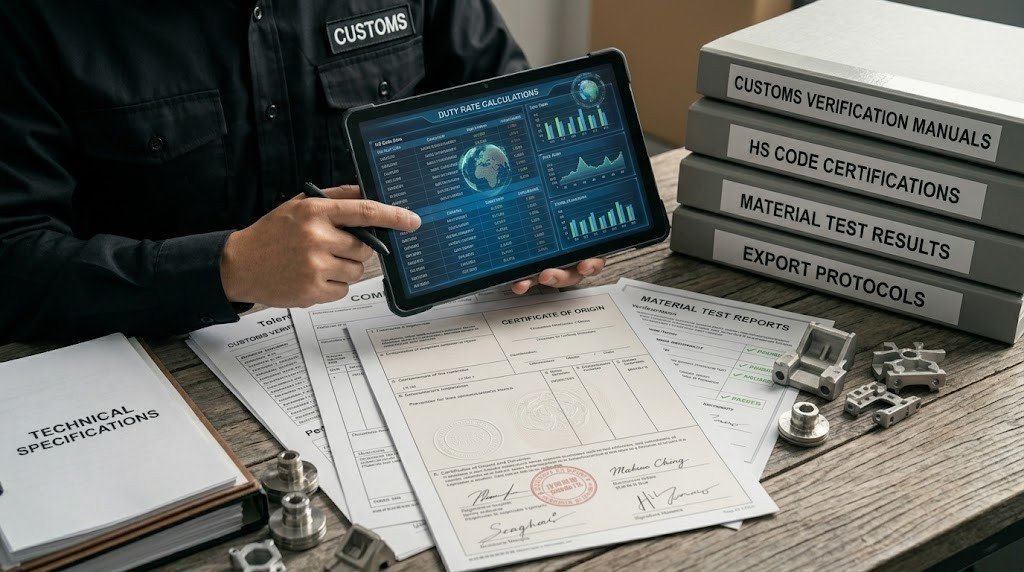
Critical Success Factors
To ensure customs clearance delivers predictable outcomes, remember:
- Classify Early and Precisely: HS code determination drives duty rates, license requirements, and regulatory obligations. Invest time in accurate classification before shipment departure.
- Validate Documentation Consistency: Ensure commercial invoice, packing list, bill of lading, and certificates contain matching information. Discrepancies trigger inspections and delays.
- Engage Local Expertise Early: Licensed customs brokers understand port-specific procedures, regulatory nuances, and efficient submission pathways. Their guidance prevents costly missteps.
- Budget for All Charges: Map every potential cost including customs duty, VAT, port fees, broker charges, and inspection fees. Unexpected expenses erode project margins.
- Maintain Communication Channels: Regular updates between exporter, freight forwarder, customs broker, and importer enable rapid resolution of emerging issues.
Common Pitfalls and How to Avoid Them
Understanding frequent mistakes helps buyers implement preventive measures:
- Assuming HS Codes Are Universal: Classification rules vary by country. A code accepted in one market may be rejected in another. Verify classification with destination customs authorities.
- Underestimating Processing Times: Customs clearance can take days or weeks depending on documentation completeness, inspection requirements, and port congestion. Build buffer time into project schedules.
- Overlooking Post-Clearance Obligations: Some countries require post-import reporting, usage verification, or periodic compliance audits. Understand ongoing obligations to avoid penalties.
- Neglecting Currency Conversion Accuracy: Duty calculations often use official exchange rates on specific dates. Ensure commercial invoices reflect correct conversions to avoid valuation adjustments.
- Skipping Pre-Shipment Verification: Submitting documents for pre-clearance review identifies issues before cargo arrives. This proactive step prevents costly delays at the port.
The Role of Technology in Modern Customs Clearance
Digital tools streamline documentation, tracking, and compliance:
- Single-Window Systems: Platforms like Kenya TradeNet, Indonesia INSW, and India ICEGATE enable electronic submission of all import documents through one portal, reducing paperwork and processing time.
- Blockchain Documentation: Emerging blockchain solutions provide tamper-proof records of certificates, invoices, and shipment data, enhancing trust and reducing verification delays.
- AI-Powered Classification: Machine learning tools assist with HS code determination by analyzing product descriptions and historical classification data, improving accuracy and consistency.
- Real-Time Tracking Dashboards: Integrated logistics platforms provide visibility into customs status, document approval milestones, and estimated release times, enabling proactive planning.
When adopting technology solutions, prioritize platforms with proven integration capabilities, strong data security, and responsive support teams.
Conclusion
This complete guide to import duties and customs clearance for industrial machinery underscores one truth: preparation and precision prevent costly delays. By understanding HS code classification, destination-specific requirements, documentation standards, and risk mitigation strategies, international buyers can navigate customs processes with confidence. Clearance is not an obstacle; it is a manageable phase of the procurement lifecycle when approached with knowledge and the right partners.
Machines in China is committed to being your trusted partner in customs coordination, providing documentation expertise, broker networks, and clearance support to protect your shipment timeline and budget at every stage. The opportunity to access high-performance Chinese machinery is vast. The path to compliant, efficient import is clear. Welcome to confident, controlled industrial equipment importing.
Website: https://machines-in-china.com Email: sales@machines-in-china.com