
Quality Control Standards for Chinese Manufacturing Equipment: What International Buyers Must Know


Navigating quality control for Chinese industrial machinery is the single most critical factor in protecting your capital investment and ensuring production success. While Chinese manufacturers produce world-class equipment, quality consistency varies significantly between suppliers. Without rigorous inspection protocols, international buyers risk receiving machinery that fails to meet specifications, uses inferior components, or lacks proper documentation. This complete quality assurance guide consolidates every essential element, from pre-production planning to pre-shipment validation, into a single, actionable framework. For factory owners, procurement managers, and engineering firms, mastering these quality control fundamentals is the key to securing equipment that performs reliably throughout its operational lifecycle.
Machines in China has compiled this guide based on over 1,800 quality control engineers stationed across China’s industrial hubs and more than 8 million successful machinery exports. We believe that verified quality is non-negotiable.
Phase 1: Pre-Production Quality Planning
Before manufacturing begins, establish the foundation for consistent quality:
- Technical Specification Agreement: Define measurable acceptance criteria for dimensional tolerances, surface finish, performance output, and safety features. Document these requirements in a formal Quality Agreement signed by both parties.
- Material Certification Requirements: Specify approved grades for structural steel, electrical components, hydraulic systems, and wear parts. Require mill certificates, material test reports, and traceability documentation for critical components.
- Component Brand Approval List: Identify approved manufacturers for motors, drives, PLCs, sensors, and bearings. Prohibit substitutions without written client approval to prevent inferior component installation.
- Inspection Milestone Schedule: Agree on key checkpoints for quality verification, including raw material receipt, sub-assembly completion, final assembly, and pre-shipment testing. Assign responsibility for each inspection point.
- Documentation Standards: Define required deliverables including operation manuals, electrical schematics, maintenance schedules, spare parts lists, and compliance certificates. Specify language requirements and format preferences.
Phase 2: In-Process Quality Verification
Monitor quality throughout the manufacturing process to catch issues early:
- Raw Material Inspection: Verify that incoming materials match specified grades and dimensions. Check material certificates against physical samples. Reject non-conforming materials before they enter production.
- Fabrication Quality Checks: Inspect welding quality, machining tolerances, and surface preparation at critical stages. Use non-destructive testing methods such as ultrasonic or dye penetrant inspection for structural welds.
- Sub-Assembly Validation: Test functional sub-assemblies including hydraulic circuits, electrical control panels, and drive systems before integration into the complete machine. Verify pressure ratings, electrical continuity, and control logic.
- Final Assembly Inspection: Confirm proper alignment of moving parts, secure fastening of components, and correct installation of safety features. Check that all specified components are present and properly installed.
- Process Documentation Review: Ensure that quality records, inspection reports, and non-conformance logs are maintained throughout production. Verify that corrective actions are documented and implemented.
Phase 3: Pre-Shipment Performance Validation
The final opportunity to verify equipment quality before payment and shipment:
- Load Testing Under Production Conditions: Run the machine at specified capacity to verify output quality, production speed, and operational stability. Measure actual performance against contractual guarantees.
- Dimensional Accuracy Verification: Use precision measurement tools to confirm that critical dimensions match technical drawings within specified tolerances. Check alignment, mounting hole positions, and overall machine footprint.
- Safety System Testing: Verify that emergency stops, safety interlocks, overload protection, and guarding systems function correctly. Document test results with video evidence.
- Control System Validation: Test all operating modes, automation sequences, and human-machine interface functions. Confirm that software versions match specifications and that backup files are provided.
- Documentation Package Review: Verify completeness and accuracy of all required documentation including operation manuals, maintenance guides, electrical schematics, spare parts lists, and compliance certificates.
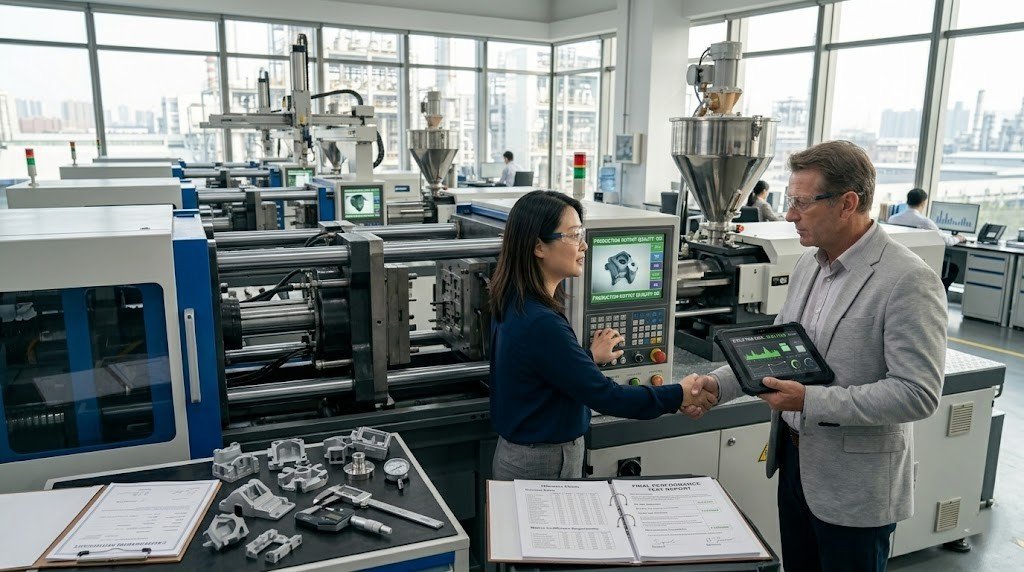
Phase 4: Post-Inspection Actions and Shipment Authorization
Finalize quality verification and prepare for export:
- Deficiency Resolution Protocol: Document any non-conformances identified during inspection. Require the manufacturer to submit corrective action plans with timelines. Re-inspect after corrections are implemented.
- Client Approval Process: Provide the international buyer with comprehensive inspection reports including photos, videos, test data, and documentation reviews. Obtain written approval before authorizing shipment.
- Payment Release Coordination: Upon satisfactory inspection results and client approval, authorize release of final payment according to contract terms. Ensure payment method aligns with agreed security protocols.
- Packaging and Crating Verification: Inspect export packaging to ensure equipment is properly secured, protected against moisture, and crated to international shipping standards. Verify that vulnerable components receive additional protection.
- Shipping Documentation Finalization: Confirm that all export documents are complete and accurate, including commercial invoice, packing list, bill of lading, certificate of origin, and quality certificates.
Critical Success Factors
To ensure quality control delivers reliable results, remember:
- Define Measurable Standards: Vague specifications lead to subjective interpretations. Use quantifiable tolerances, performance metrics, and acceptance criteria that can be objectively verified.
- Inspect at Multiple Stages: Do not wait until final assembly to check quality. Early detection of issues reduces rework costs and prevents schedule delays.
- Use Independent Verification: Third-party inspection agencies provide objective assessments free from supplier influence. Their reports carry greater weight in dispute resolution.
- Document Everything: Maintain detailed records of all inspections, test results, communications, and approvals. Documentation protects all parties and facilitates issue resolution.
- Never Compromise on Final Approval: Do not authorize shipment or final payment without satisfactory pre-shipment inspection results. This is your most powerful leverage point.

Common Quality Issues and How to Prevent Them
Understanding frequent problems helps buyers implement preventive measures:
- Component Substitution: Suppliers may install lower-grade components to reduce costs. Prevention: Require component brand lists in contracts and verify during in-process inspections.
- Welding Defects: Poor weld quality can cause structural failures. Prevention: Specify welding standards, require certified welders, and use non-destructive testing for critical joints.
- Electrical Non-Compliance: Undersized wiring or non-certified components create safety risks. Prevention: Review electrical schematics before production and inspect control panels during assembly.
- Dimensional Inaccuracy: Machines that do not fit facility constraints or integrate with existing lines. Prevention: Verify critical dimensions during fabrication and conduct final dimensional checks.
- Incomplete Documentation: Missing manuals or certificates delay commissioning and compliance. Prevention: Include documentation requirements in the Quality Agreement and verify before shipment.
The Role of Third-Party Inspection Agencies
Independent inspection services add objectivity and expertise to quality verification:
- Global Standards Knowledge: Agencies such as SGS, Bureau Veritas, and Intertek understand international compliance requirements and can verify certification eligibility.
- Technical Expertise: Professional inspectors have specialized training in machinery testing, measurement techniques, and defect identification.
- Unbiased Assessment: Third-party inspectors have no financial interest in the transaction, providing objective evaluations that carry weight in dispute resolution.
- Global Reporting: Inspection reports from recognized agencies are accepted by banks, insurers, and customs authorities worldwide.
When engaging third-party inspectors, define the scope clearly, provide technical specifications in advance, and ensure they have access to necessary testing equipment and facility areas.
Conclusion
This complete guide to quality control for Chinese manufacturing equipment underscores one truth: quality is not an expense, it is an investment in operational reliability and capital protection. By implementing systematic verification at pre-production, in-process, and pre-shipment stages, international buyers can identify and resolve issues before they become costly problems. Whether you conduct inspections internally or through third-party services, never skip quality verification when importing industrial machinery from China.
Machines in China is committed to being your trusted partner in quality assurance, providing 1,800 plus quality control engineers stationed across China’s industrial hubs to protect your investment at every stage. The opportunity to access high-performance Chinese machinery is vast. The path to securing reliable equipment is clear. Welcome to confident, verified industrial equipment sourcing.
Website: https://machines-in-china.com Email: sales@machines-in-china.com